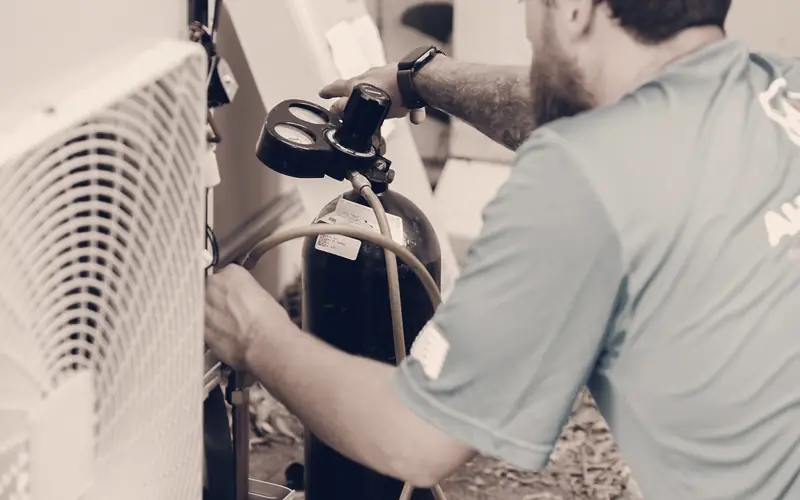
What Universal Certification Means
40 CFR 82.161 sets up four types of technician certification. Type I covers small appliances, Type II covers high- and medium-pressure appliances, and Type III covers low-pressure appliances. Universal technicians are certified for all three, so they can service any stationary appliance covered by Section 608. Every certification also requires passing Core.
Universal isn’t a separate exam with different content. It is the same four sections, taken together or accumulated over time.
How the Universal Test Is Structured
| Section | Questions | Pass mark | Covers |
|---|---|---|---|
| Core | 25 | 70% (18) | Ozone, Clean Air Act, the three Rs, sales, safety, shipping |
| Type I | 25 | 70% (18) | Small appliances |
| Type II | 25 | 70% (18) | High- and medium-pressure appliances |
| Type III | 25 | 70% (18) | Low-pressure appliances |
Under Appendix D, tests that include Type II or Type III must be closed-book and proctored. When Type I is part of a Universal test, it is proctored too, and the 70% mark applies rather than the 84% used for mail-in Type I tests.
Section-by-Section Scoring
Each section is scored on its own. If you score 20 in Core, 22 in Type I, 15 in Type II and 19 in Type III, you pass Core, Type I and Type III, and fail Type II. You would be certified Type I and Type III, and could retake Type II to complete Universal. The EPA 608 Universal practice test scores you the same way, so you can see which section needs work.
Should You Go Universal?
Reasons to choose Universal:
- Flexibility to take any job, from domestic appliance repair to chiller plants.
- One study period instead of returning later.
- Some employers ask for it in job postings, though requirements vary by employer.
Reasons to start with one type:
- You only work on residential AC (Type II) and want to start work quickly.
- You’re short on study time and want a smaller first target.
- Type III material is unfamiliar if you’ve never seen a chiller.
There is no federal rule saying Universal is better or required; it depends on your work. Many technicians take Core and Type II first, then add the rest.
One Sitting or Several?
Taking all four sections at once means one booking and one proctoring session. It also means a long test and more to hold in your head. If you choose one sitting:
- Allow plenty of time; programs set their own time limits.
- Do Core and Type II study first, since they carry the most detail, then Type I and Type III.
- Expect overlapping topics, such as recovery equipment certification and safety, which show up in more than one section.
If you split it, check how your program combines earlier results. Policies vary by provider.
A Study Plan for Universal
A plan many candidates find workable is three to four weeks of short daily sessions:
- Week 1: Core. Read the EPA 608 Core Study Guide and learn the sales restriction, venting ban and three Rs definitions.
- Week 2: Type II. Type II has the most numbers. Use the EPA 608 Type II Study Guide and memorise Table 1 and the leak-rate triggers.
- Week 3: Type I and Type III. Work through the EPA 608 Type I Study Guide and the EPA 608 Type III Study Guide.
- Week 4: Mixed review. Take full mock tests and revisit every wrong answer at the cited rule.
These timings are suggestions; how long you need depends on your experience.
Topics That Appear Across Sections
- Recovery equipment certification (82.158) and evacuation requirements (82.156).
- Leak repair rules for appliances with 50 lb or more of ozone-depleting refrigerant (82.157).
- Safety: nitrogen for pressure tests, cylinder fill limits, PPE and A2L refrigerants.
- Recordkeeping, such as disposal records and leak-rate calculations.
The 2027 question bank also adds more on flammable A2L and A3 refrigerants. The EPA 608 Exam Changes for 2027 page summarises what’s new.
After You Pass
Your program issues proof of certification showing your types. Keep a copy at your place of business, as 82.161 requires, and keep it for three years after you stop working as a technician. Certification doesn’t expire under current federal rules. State or local licences for HVAC contracting are separate; see EPA 608 vs State HVAC License.
Is Universal Worth It for You?
Universal makes the most sense if you:
- Work for a mixed service company that sends you to residential, commercial and industrial jobs
- Plan to move between employers or regions
- Expect to work on chillers or large commercial refrigeration in future
- Want to take one study block and be done
A single type may be enough if you specialise. Appliance repair technicians working only on refrigerators and window units can certify for Type I. Residential HVAC technicians usually need Type II. But many employers prefer Universal, because it lets them assign you to any job.
Section by Section: What to Focus On
Core underpins everything: the venting prohibition, the three Rs, the sales restriction, ozone and climate basics, safety and shipping. The EPA 608 Core Study Guide covers it.
Type I is the shortest technical section: small-appliance recovery percentages, system-dependent recovery, and the small appliance definition. See the EPA 608 Type I Study Guide.
Type II is the largest for most people: leak repair thresholds, Table 1 evacuation levels, leak testing and charging. See the EPA 608 Type II Study Guide.
Type III covers low-pressure chillers: rupture discs, purge units, water-side heating during recovery, and the 25 mm Hg absolute evacuation level. See the EPA 608 Type III Study Guide.
If You Fail One Section
Sections are scored independently. If you pass three of four, you’re certified for the types you passed (with Core), and you can retake only the failed section later. Your program will explain retake fees and timing, which vary by provider.
Timing Your Universal Attempt
Plan your test date after you can comfortably pass practice tests in every section. Book early if you’re aiming to finish before the 2027 question-bank change.
Frequently Asked Questions
How many questions are on the EPA 608 Universal exam?
100: 25 Core, 25 Type I, 25 Type II and 25 Type III. Each section needs 70% (18 of 25) to pass.
If I fail one section, do I lose the whole Universal test?
No. Sections are scored separately. You are certified for the types you passed (with Core), and can retake only the failed section later. Retake fees and rules vary by provider.
Can I upgrade from Type II to Universal later?
Yes. If you already passed Core and Type II, you can take Type I and Type III later through an approved program to reach Universal. Check your program’s policy on combining results from earlier tests.
Is Universal worth it if I only work on residential AC?
Type II alone covers residential split systems. Universal is useful if you may also service domestic appliances or chillers, or want the widest job options, but it isn’t required for Type II work.