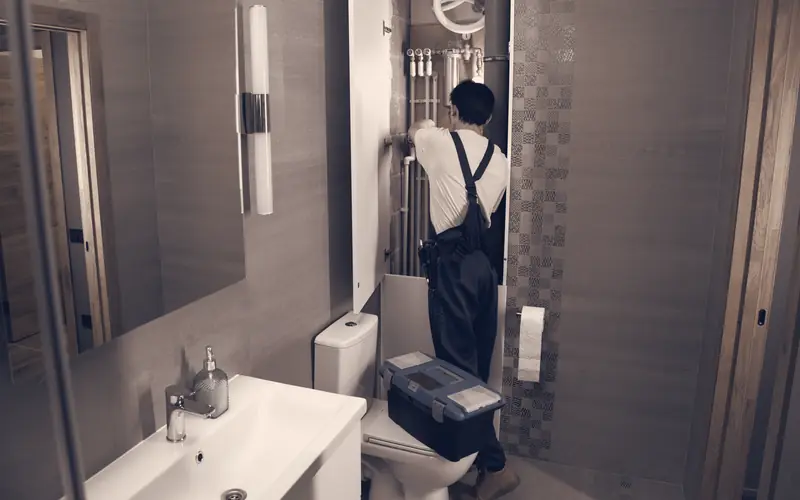
Step 1: Find Your Licensing Authority
Plumbing licensing is controlled by states, and in some places by cities or counties. Start with your board’s website and note:
- Licence levels and what each allows
- Registration requirements for apprentices or helpers
- Experience and classroom hours for each exam
- The code adopted (IPC, UPC or a state code)
- Renewal and continuing education rules
In Texas, for example, the State Board of Plumbing Examiners (TSBPE) handles registration and licensing.
Step 2: Start an Apprenticeship
Most plumbers learn through an apprenticeship. The U.S. Bureau of Labor Statistics describes apprenticeships as combining paid on-the-job training with technical instruction, commonly over several years. Routes include:
- Union programs, such as those run by United Association locals
- Contractor association programs
- Registered apprenticeships listed on Apprenticeship.gov
Some states require you to register as an apprentice or helper before working. Do this first so your hours count.
Step 3: Document Your Experience
Boards require proof of supervised experience. Keep:
- Dates and hours worked
- Supervising plumber names and licence numbers
- Employer details and a summary of the work
Experience requirements differ widely between states; confirm the current hours with your board.
Step 4: Pass the Journeyman Exam
When you’re eligible, apply for the journeyman exam. Depending on your state it may include a written code test, an isometric drawing and a practical section. See Plumbing License Exam Overview for topics and preparation.
Step 5: Work as a Journeyman
Journeymen perform plumbing work, often under a master plumber or contractor. Use this time to broaden experience: commercial work, gas piping, water heaters, backflow devices.
Step 6: Master Plumber or Contractor
A master plumber licence usually requires additional years of experience as a journeyman and a further exam, sometimes with business and law. Some states also have a separate plumbing contractor licence, with insurance and bonding requirements.
Step 7: Endorsements and Specialties
Many jurisdictions offer endorsements, for example:
- Medical gas piping installation
- Backflow prevention assembly testing
- Water treatment
- Fuel gas piping
Each has its own training and exam requirements.
Step 8: Renew and Stay Current
Many states require continuing education for renewal. Model codes are updated on a regular cycle by ICC and IAPMO, and states adopt new editions at different times.
The Path at a Glance
| Stage | Typical requirement | Where to check |
|---|---|---|
| Apprentice / helper | Registration, supervised work | State board |
| Journeyman | Documented experience, exam | Candidate bulletin |
| Master | More experience, master exam | State board |
| Contractor | Business licence, insurance | State or local board |
| Endorsements | Extra training, exams | State board |
Skills That Help
- Reading blueprints and isometric drawings
- Basic maths for sizing, slope and volume
- Physical stamina and comfort in tight spaces
- Customer communication for service work
Common Mistakes
- Not registering before starting work
- Weak records of hours and supervisors
- Studying the wrong code or edition
- Assuming a licence transfers to another state
Related Paths
Plumbers who move into HVAC or refrigeration need EPA refrigerant certification to work on refrigerant circuits; see How to Get EPA 608 Certified Online. For a parallel trade, compare How to Become a Licensed Electrician.
What Apprentices Learn
Plumbing apprenticeships typically cover:
- Safety: trench safety, confined spaces, working with torches and hot work
- Code: the adopted plumbing code and how to navigate it
- DWV systems: sizing, slope, venting and cleanouts
- Water supply: sizing, materials, pressure and backflow protection
- Fixtures and appliances: water heaters, fixtures and their connections
- Gas piping where plumbers install fuel gas systems
- Blueprint and isometric reading
Classroom instruction pairs with field work, so you learn why a rule exists while you install to it.
Union vs Non-Union Routes
Union apprenticeships through United Association locals usually have application windows, aptitude tests and a set wage progression. Contractor association and employer-sponsored programs may enrol on a rolling basis. Both can lead to licensure if hours are documented and accepted by your board. Ask each program how they record hours and whether the board accepts their classroom training.
Costs to Plan For
Fees vary by state and program. Typical costs include registration, tuition (sometimes paid by the program), code books, tools, exam fees and licence fees. Check your board’s fee schedule directly.
Timeline Example
A typical path: register as an apprentice or helper, train for several years while logging hours, pass the journeyman exam, work as a journeyman, then sit the master exam. The exact minimums are set by your board, and some states have extra levels such as tradesman or residential plumber licences.
Working Across State Lines
Plumbing licences generally don’t transfer automatically. Some states have reciprocity agreements with specific neighbours, often requiring equivalent exams and experience. If you plan to move, check the destination board early.
Key Terms
- Plumber’s helper or apprentice: an entry-level worker registered with the board in many states, working under supervision.
- Journeyman plumber: licensed to perform plumbing work.
- Master plumber: licensed to plan and supervise plumbing work, often to pull permits.
- Endorsement: an add-on credential for specialist work such as medical gas or backflow testing.
- DWV: drainage, waste and vent, the system that carries waste away and lets air in.
- Backflow: water flowing in the wrong direction into the potable supply, prevented by air gaps and assemblies.
- Reciprocity: an agreement that lets a licence holder from one state be licensed in another with reduced testing.
Gas Piping and Backflow Work
In many states, gas piping and backflow prevention testing are treated as separate qualifications. A plumbing licence may cover fuel gas piping in one state, while another state requires a separate gas fitter licence or endorsement. Testing backflow prevention assemblies commonly requires its own certification, often issued by the state or a local water authority. Check which of these your licensing authority requires before you take jobs that involve them.
Checking the Rules as You Progress
Licensing rules change. States update experience requirements, adopt new code editions and revise their exam providers. At each step, from registering as an apprentice to applying for a master licence, check the current requirements on the official licensing authority’s website rather than relying on older advice from forums or colleagues.
Questions to Ask a Prospective Employer
- Will my hours be documented and signed off by a licensed plumber?
- Do you sponsor apprentices through a registered apprenticeship program?
- What kinds of work will I see: new construction, service, commercial or a mix?
- Will I get experience with gas piping, water heaters and drain cleaning?
A broad mix of work makes the journeyman exam easier, because the questions cover drainage, venting, water supply and fixtures.
Frequently Asked Questions
How long does it take to become a licensed plumber?
It varies by state. Apprenticeships commonly last several years, according to the U.S. Bureau of Labor Statistics. Your board sets the exact experience needed before each exam.
Do plumbers need a licence in every state?
Most states and many localities require plumbers to be licensed, but rules vary and some licensing is local. Check with your state board and city.
What is the difference between a journeyman and a master plumber?
A journeyman is licensed to perform plumbing work, usually under a master or contractor. A master has more experience and has passed a further exam, and can usually plan and supervise work and pull permits.
Can I start as a plumber’s helper without experience?
Yes, in most places. Many jurisdictions require helpers or apprentices to register with the board before working. Check your state’s rules.